

Core Drilling Machine Checklist: Why GPR Concrete Scanning Comes Before the First Cut
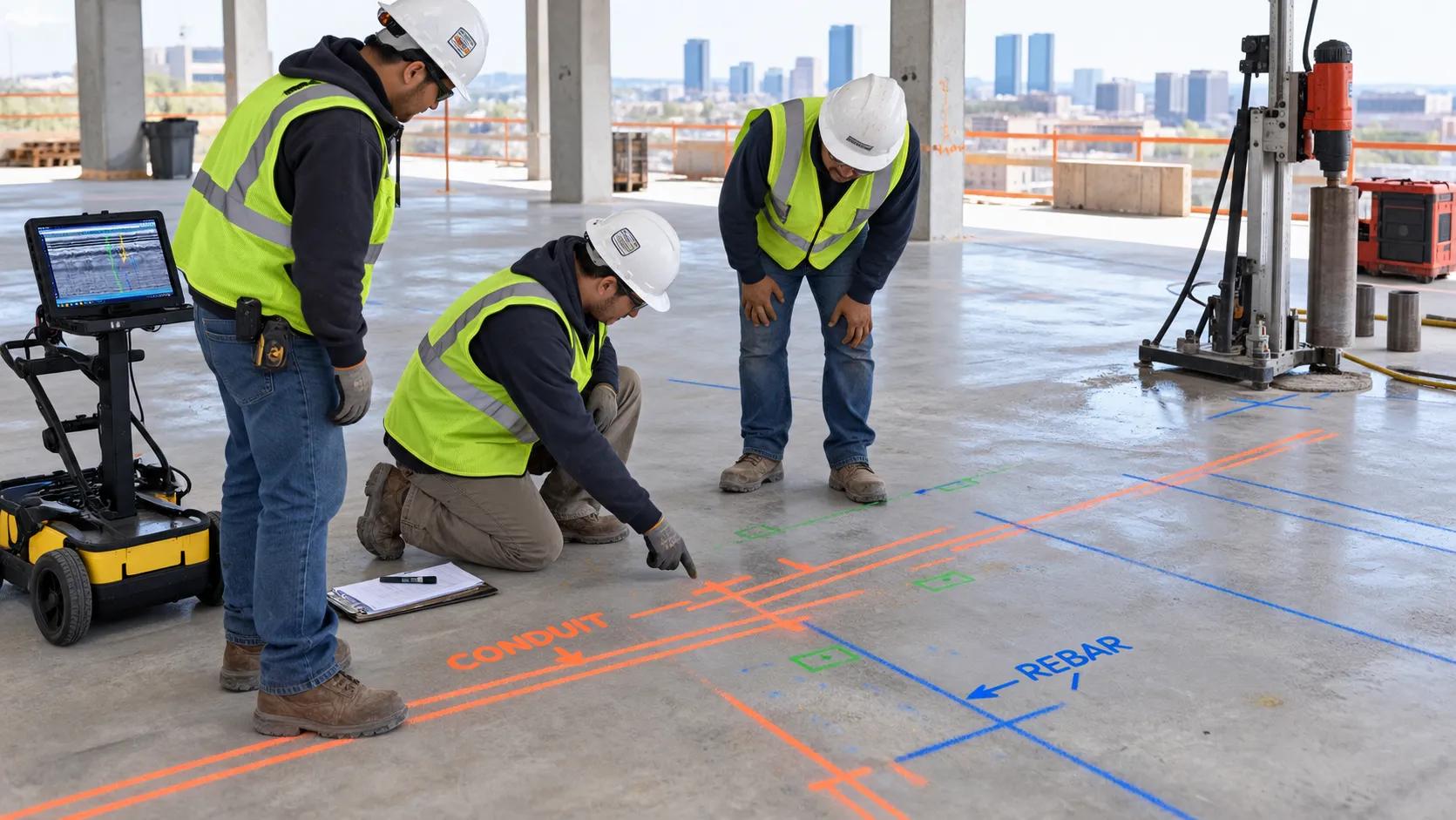
A crew rolls a core drilling machine onto a commercial slab, anchors the stand, and starts the cut. Nothing about the machine tells the operator what is inside the concrete. The bit spins the same way whether it meets stone or a steel conduit. Dust is part of this story too. OSHA's respirable crystalline silica standard (2016) sets a permissible exposure limit of 50 micrograms per cubic meter over an eight-hour shift, and every re-cut adds more dust. Scanning first helps with both problems. This post covers what the machine does, why GPR scanning should come first, how to build a pre-cut checklist, and where an anchor pull test fits.
What Does a Core Drilling Machine Do?
A core drilling machine uses a hollow, diamond-tipped bit to cut clean, round holes through concrete. Crews use it for pipe sleeves, conduit runs, HVAC openings, and anchor holes. It mounts on a stand fixed to the slab, or it is held by hand for smaller holes.
A core drilling machine cannot sense what is inside concrete. It cuts rebar, conduit, and post-tension cable the same way it cuts stone, and steel can damage the diamond segments on the bit.
Concrete scanning services close that blind spot. Ground-penetrating radar (GPR) sends short radar pulses into the slab. Steel, pipes, and air pockets reflect those pulses differently than solid concrete, so a trained technician can mark them on the surface before cutting starts.
What a scan can identify:
Rebar: steel bars that reinforce the slab
Post-tension cables: high-load cables that must never be cut
Conduits: electrical and data lines inside the slab
Voids: hollow pockets that can weaken a hole location

Why Should Scanning Come Before the First Cut?
Scanning has to come first because a cut cannot be undone. A severed post-tension cable can cost tens of thousands of dollars to repair, and a cut conduit can knock out power to other trades.
Here is a scenario that plays out often on commercial jobs. A drawing set shows a clear slab. The scan finds a conduit running through a planned opening. The crew shifts the hole a few inches, and the electrical trade never knows how close the bit came.
There is a health reason as well. OSHA estimated that its 2016 silica rule would save more than 600 lives and prevent more than 900 new silicosis cases each year. Fewer re-cuts means less dust and less exposure for the crew.
Why scanning first pays off:
Prevents damage that cannot be reversed once the bit is cutting
Reduces re-cuts and the dust that comes with them
Protects the schedule from multi-day stoppages
Creates a record showing due diligence if a dispute comes up
How Does a Pre-Cut Checklist Work?
A pre-cut checklist keeps scanning, marking, and setup in the right order. Ground penetrating radar services fit at the front, and the core drilling machine only comes out after the crew has signed off.
Site walk: confirm hole locations and known hazards
Grid scan: the GPR unit covers the area in overlapping passes
Marking: hazards and safe zones are painted on the slab
Crew review: the coring team checks the marks before setup
Core drilling: the machine runs only in cleared spots
Anchor pull test: applies measured tension to installed anchors to confirm they hold their rated load
The anchor pull test is a separate step. The scan protects the slab before cutting, and the pull test proves the anchor afterward.
Pre-Cut Checklist Compared
Step | What It Prevents | Who Usually Handles It | When It Happens |
|---|---|---|---|
GPR scan | Hitting rebar, cables, or conduits | Scanning technician | Before setup |
Hazard marking | Confusion about safe zones | Scanning technician | Right after the scan |
Crew review | Misread or missed markings | Drilling crew and site lead | Before the cut |
Core drilling | Not applicable, this is the cut | Drilling operator | After sign-off |
Anchor pull test | Anchors that fail under load | Testing technician | After installation |
What Mistakes Happen at the Setup Stage?
The biggest mistake is skipping the scan on jobs that look simple. Thin slabs and single-hole jobs can hide just as much as thick ones, and old drawings are often wrong.
Another common error is scanning only the exact hole spot. Bits can wander, so the scan should cover a margin around each location. Teams also reuse an old scan after the plan changes, but new hole locations need a new scan.
GPR has limits, and it is fair to say so. Dense rebar mats can mask deeper objects, wet concrete can weaken signals, and results depend on the technician's skill. That is why a second person should review the markings before the machine is set up.
What Tips Help Coordinators Most?
In my opinion, scanning should be a written line item in every coring scope, not something requested case by case.
Ask providers whether scanning is included in the quote or billed separately
Book the scan a few days ahead so findings can be acted on
Confirm the technician is trained in GPR interpretation
Get a written scan report for the project file
Plan an anchor pull test for load-bearing anchors
File scan reports and test results together for future work

FAQ
Q1: What is a core drilling machine? A core drilling machine uses a hollow, diamond-tipped bit to cut clean, round holes through concrete for pipes, conduits, ductwork, and anchors.
Q2: Why scan concrete before core drilling? A core drilling machine cannot sense hidden steel, so scanning shows rebar, conduits, and cables first and prevents damage that cannot be undone after cutting.
Q3: What do concrete scanning services include? They usually include a GPR scan of the slab, hazard markings painted on the concrete, and often a written report of what was found and where.
Q4: Can ground penetrating radar services find everything? No. Dense rebar mats, deep objects, and wet concrete can limit results, so a skilled technician and a margin around each hole matter.
Q5: What is an anchor pull test? An anchor pull test applies measured tension to an installed anchor to confirm it holds its rated load. It happens after core drilling and installation.
Q6: Does a clean scan replace an anchor pull test? No. The scan checks for hidden hazards before core drilling, while the pull test checks anchor strength afterward. They answer different questions.
Conclusion
A core drilling machine is only as safe as the information behind it. Scanning first gives the crew a clear map of the slab, keeps trades on schedule, and cuts down on repeat cuts and dust. An anchor pull test after installation completes the picture. If your next project includes coring, make scanning a required first step in the scope, and confirm it with your provider before anyone sets up the machine.