

Dust Monitoring: A Complete Guide to Site Safety and Concrete Testing Coordination
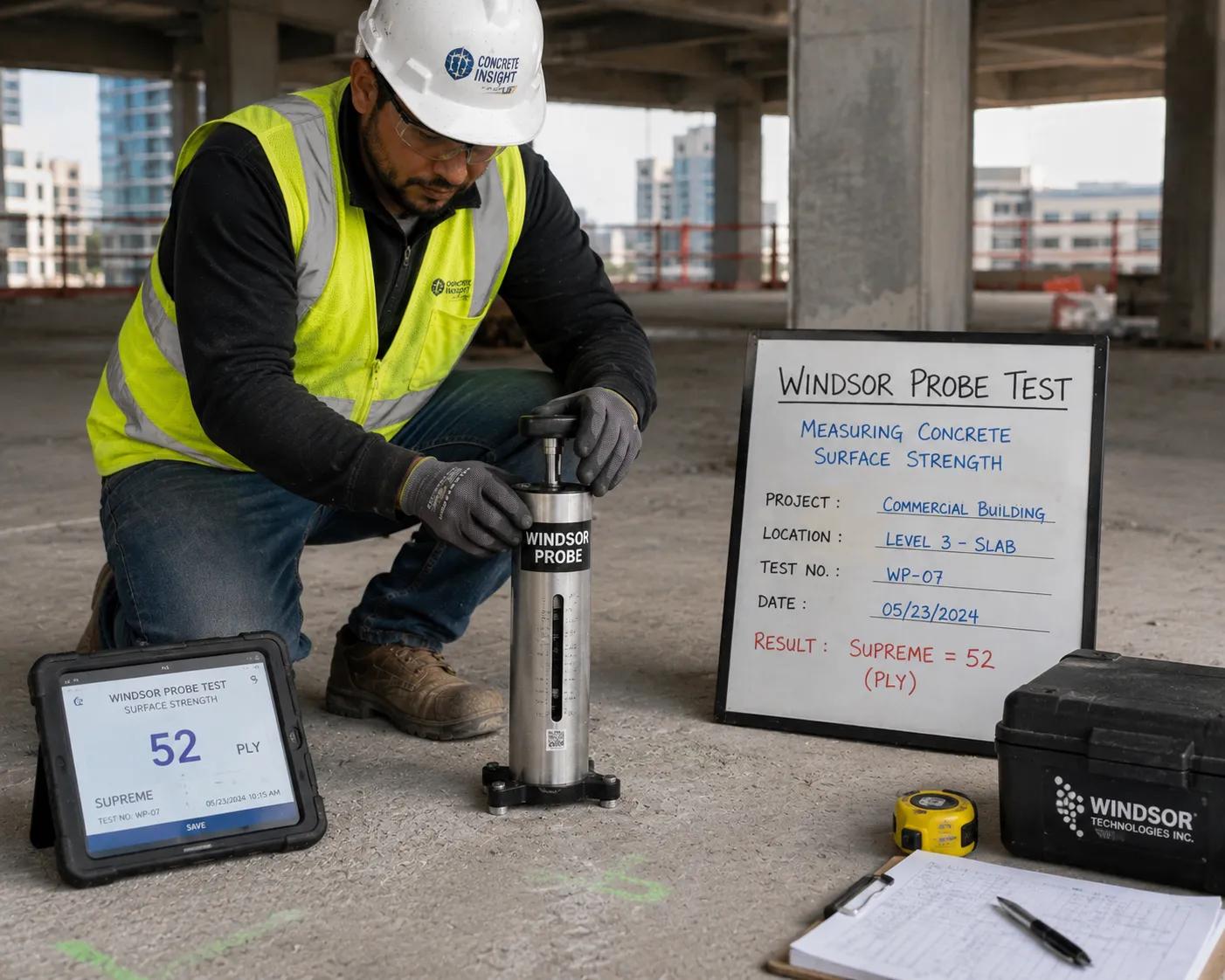
Windsor probe test measuring concrete surface strength
A demolition phase wraps up, and weeks later an inspection finds silica dust levels went untracked the entire time. That's a compliance gap that could have been caught in real time. Dust monitoring exists to close it, and on commercial projects it rarely operates in isolation — it usually runs alongside other site testing like GPR for concrete, drilling coordination, and structural verification. According to OSHA's respirable crystalline silica standard (2023), employers must monitor exposure during activities like concrete cutting, grinding, and demolition on construction sites. For a coordinator managing multiple trades, dust monitoring is one piece of a larger compliance and testing plan. This guide covers what dust monitoring involves, why it matters alongside concrete testing, how the process works, common mistakes, and where a concrete pull test or Windsor probe testing fits into the same schedule.
What Is Dust Monitoring?
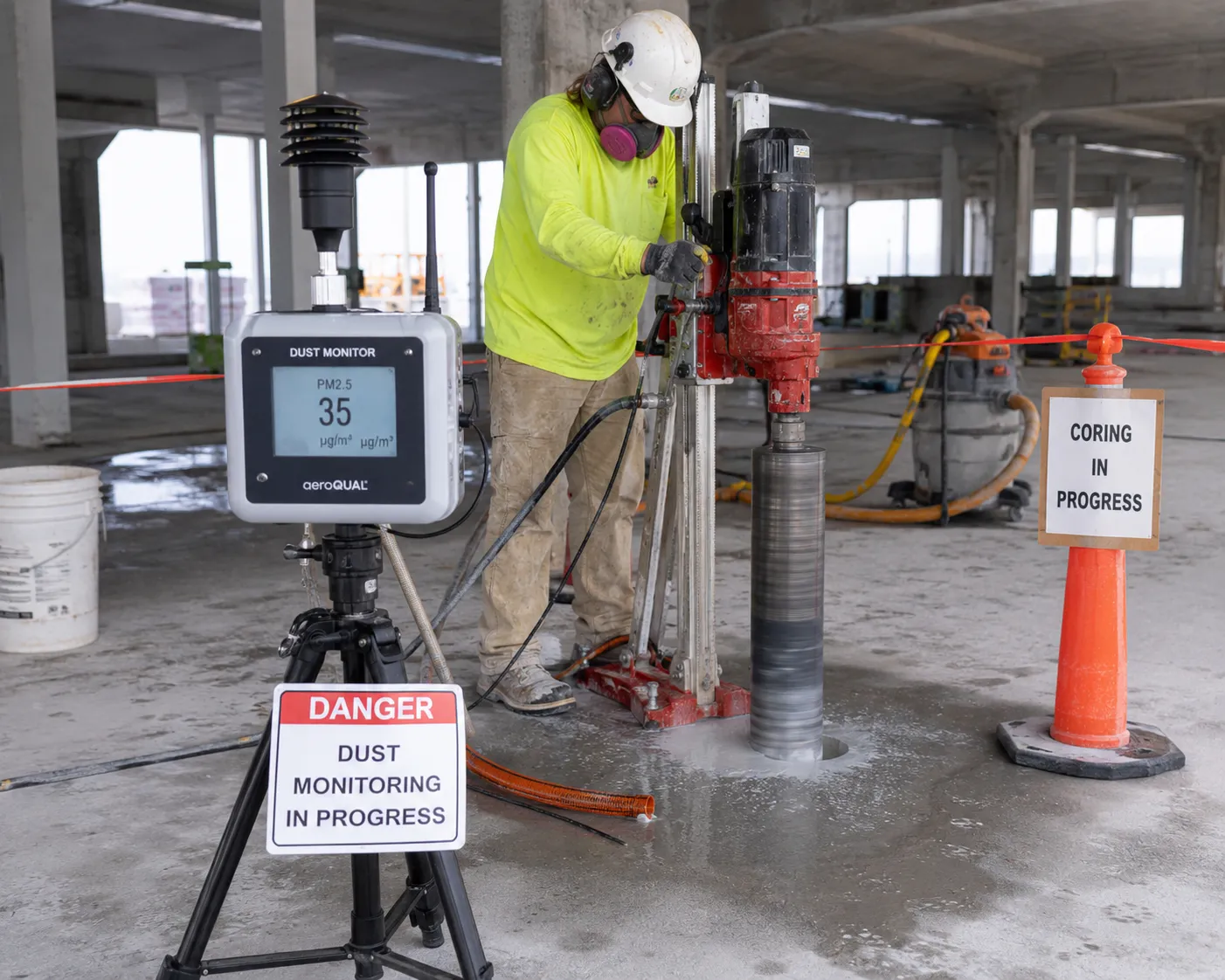
Dust monitoring uses air sampling equipment placed near active work zones to measure particulate levels, particularly respirable crystalline silica released during cutting, grinding, or demolition. Sensors log readings continuously or at set intervals throughout the workday, flagging when levels approach or exceed regulated thresholds set by OSHA.
This data serves two purposes on a commercial site. First, it protects workers from prolonged exposure to fine dust that can cause long-term respiratory harm. Second, it creates a documented compliance record that the project can reference if a safety inspection or dispute comes up later. Monitoring is typically required during any activity involving concrete cutting, coring, or demolition — which is often the same phase where GPR for concrete scanning and drilling work is happening.
What dust monitoring typically tracks:
Respirable crystalline silica — fine particles released during concrete cutting
Total dust concentration — overall airborne particulate levels near active zones
Exposure duration — how long workers are present in elevated-dust areas
Threshold breaches — automatic alerts when levels approach regulated limits
Why Does Dust Monitoring Matter Alongside Concrete Testing?
For a coordinator, dust monitoring and concrete testing often happen in the same window of a project, which means both need to be planned together rather than as separate afterthoughts. When a core drilling phase starts, that's typically when concrete drilling companies are also using GPR for concrete scanning to check for hidden hazards before cutting into the slab — the same activity that triggers dust monitoring requirements.
Skipping dust monitoring during this phase carries real risk. Exceeding silica exposure limits can trigger work stoppages, fines, or long-term health claims from crew members. On one commercial retrofit, a coordinator scheduled dust monitoring to run continuously through the coring phase, which also included a concrete pull test after anchor installation — having both data sets on file made the post-project safety audit far smoother than it would have been with gaps in either record.
Reasons to coordinate dust monitoring with concrete testing phases:
Shared timing — cutting, coring, and demolition trigger both dust and structural checks
Unified compliance record — one documented file covers safety and structural verification
Reduced rework risk — catching hazards with GPR reduces unplanned re-cutting that spikes dust levels
Owner and inspector confidence — a complete record reduces friction during audits
How Do Dust Monitoring and Concrete Testing Work Together On-Site?
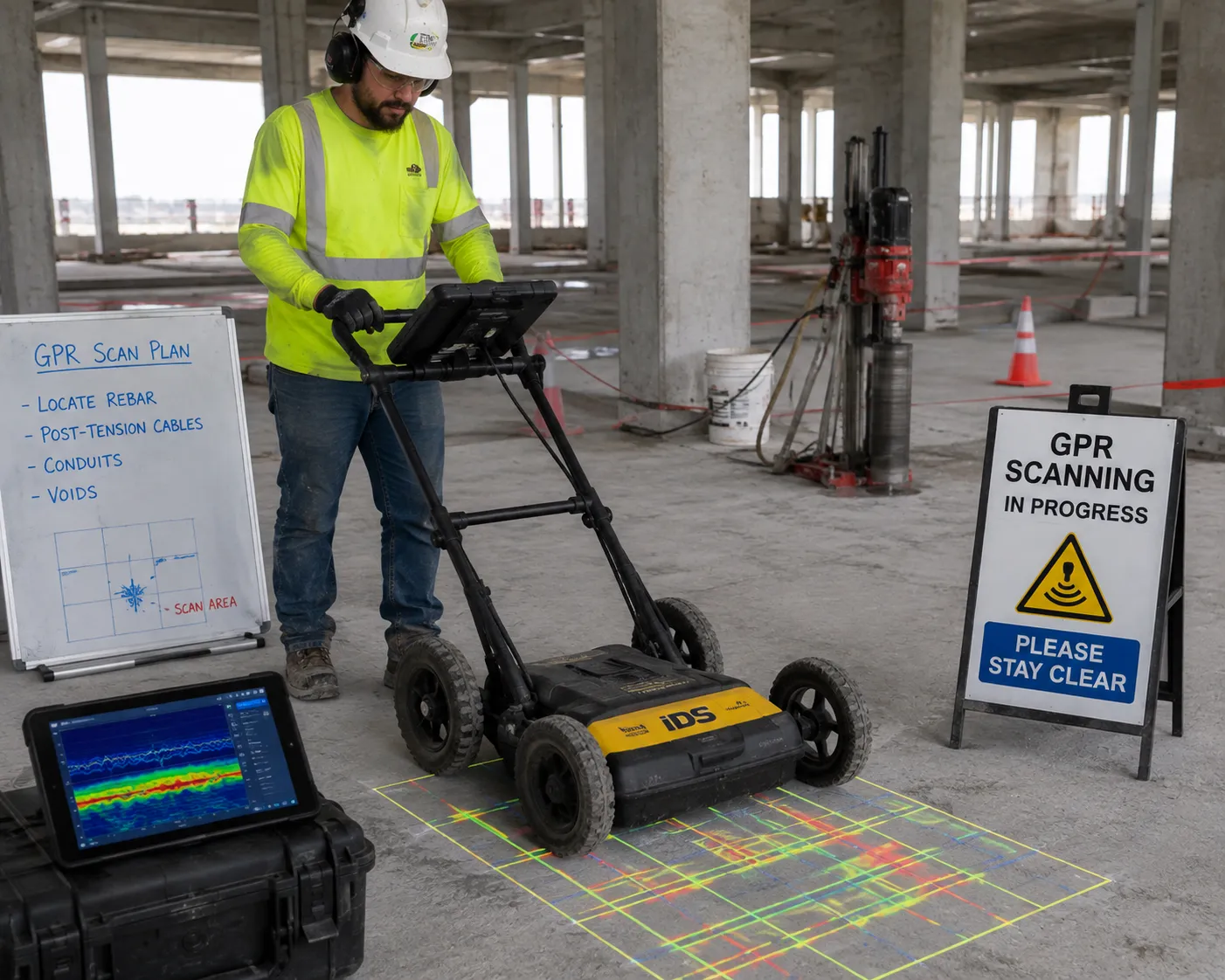
The process usually starts before cutting or drilling begins, when the coordinator confirms which zones require both dust monitoring and structural scanning. GPR for concrete scanning happens first, mapping rebar, cables, and voids so drilling crews know where it's safe to work. Dust monitors are set up in the same active zones, running continuously once cutting or coring starts.
A typical combined sequence looks like this:
Pre-work scan — GPR for concrete scanning maps hazards before drilling
Monitor setup — dust sensors placed near active cutting or coring zones
Active monitoring — readings logged continuously during drilling or demolition
Drilling and coring — concrete drilling companies work within marked, scanned zones
Post-drill testing — a concrete pull test or Windsor probe testing verifies results
Compliance filing — dust logs and testing reports are archived together
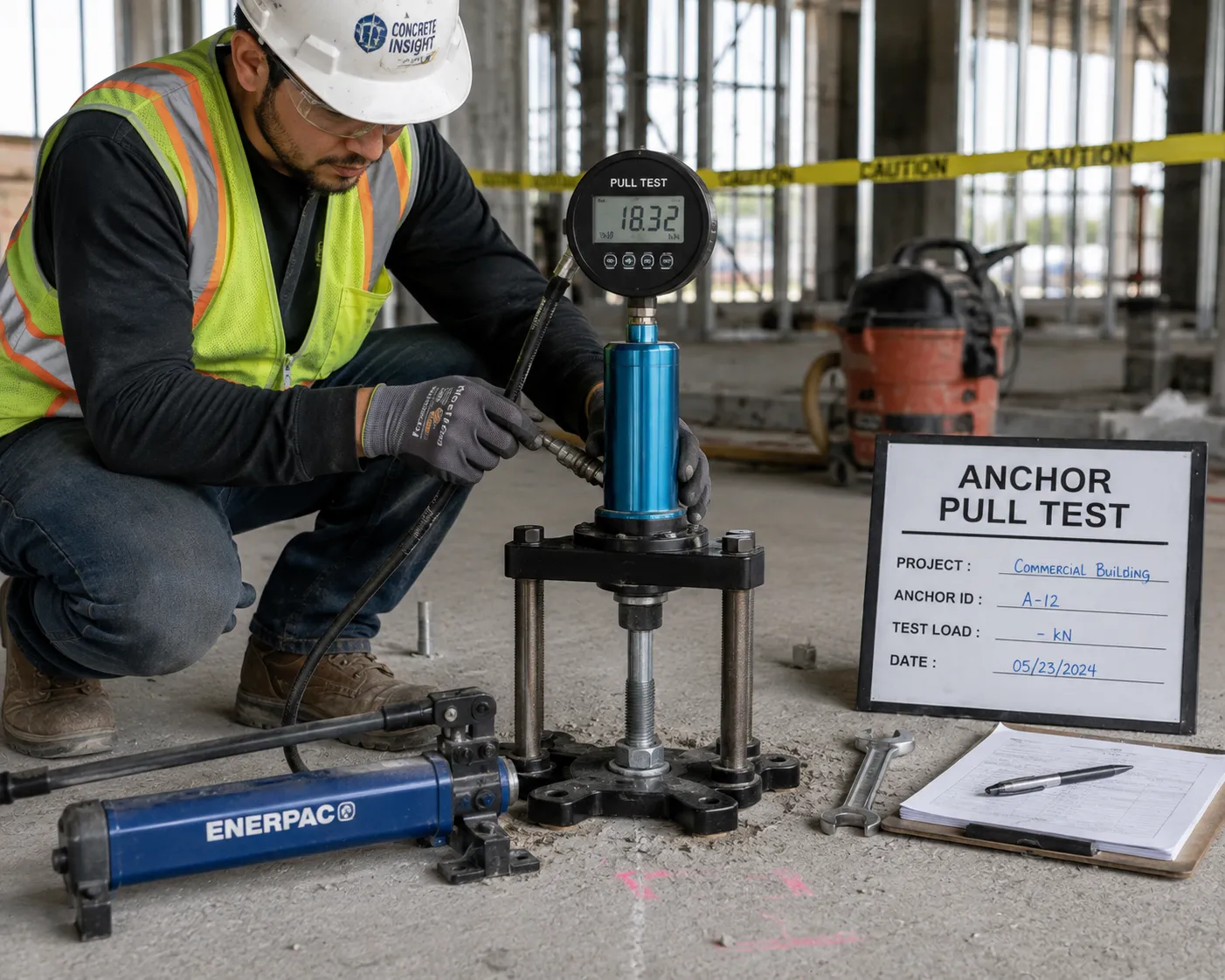
This is also where the question of what is GPR scanning often comes up for coordinators new to the process — it's simply the radar-based method used to detect what's hidden inside concrete before drilling, distinct from dust monitoring but scheduled in the same project phase. A concrete pull test, run after anchor installation, confirms holding strength, while Windsor probe testing checks the compressive strength of the surrounding concrete when quality is in question.
What Mistakes Do Coordinators Make With Dust Monitoring?
The most common mistake is treating dust monitoring as a one-time setup rather than a continuous process throughout an active cutting or demolition phase. Readings need to run for the full duration of the work, not just a spot-check at the start of the day.
Another frequent issue is failing to sync dust monitoring schedules with concrete testing phases, which leads to gaps in the compliance record right when both are most needed. Some coordinators also assume dust monitoring is optional on smaller commercial jobs, when in practice any activity involving concrete cutting can trigger OSHA's monitoring requirements regardless of project size. Finally, filing dust logs and structural test reports separately, with different formats or storage locations, makes it harder to produce a complete record during an audit.
Tips for Managing Dust Monitoring on Commercial Projects
Schedule dust monitoring to run for the full duration of any cutting, coring, or demolition activity, not just intermittently. Coordinate monitoring setup with the same planning phase as GPR for concrete scanning, so both are accounted for in the schedule from the start rather than added separately.
Keep dust logs, GPR scan reports, concrete pull test results, and Windsor probe testing data filed together in one compliance record — this makes audits and disputes far easier to resolve. Work with providers who can document findings clearly, since readable, complete reports matter more during a review than raw data alone.
Site Testing and Monitoring Methods Compared
Method | What It Checks | Timing | Best Used For |
|---|---|---|---|
Dust Monitoring | Airborne particulate levels | During cutting/demolition | Silica exposure compliance |
GPR for Concrete | Rebar, cables, voids | Before drilling | Hazard detection pre-drill |
Concrete Pull Test | Anchor holding strength | After installation | Verifying anchor performance |
Windsor Probe Test | Concrete surface strength | After curing | Checking concrete quality |
FAQ
Q1: What is dust monitoring? Dust monitoring measures airborne particulate levels, especially silica dust, to keep worker exposure within safe regulated limits during construction activities.
Q2: What is GPR scanning used for? GPR scanning uses ground-penetrating radar to detect rebar, cables, conduits, and voids inside concrete before drilling or coring begins.
Q3: How does dust monitoring relate to concrete drilling companies' work? Drilling and coring activities that concrete drilling companies perform often trigger dust monitoring requirements at the same time GPR scanning is done.
Q4: What is a concrete pull test? A concrete pull test applies controlled tension to a drilled anchor to confirm it holds its rated load without pulling loose from the concrete.
Q5: What does Windsor probe testing check? Windsor probe testing measures the compressive strength of hardened concrete by firing a probe into the surface and reading penetration depth.
Q6: Is dust monitoring required on every commercial job? Any activity involving concrete cutting, coring, or demolition can trigger OSHA's silica monitoring requirements, regardless of overall project size.
Conclusion
Dust monitoring rarely stands alone on a commercial job — it overlaps directly with the same phase where GPR for concrete scanning, drilling, and structural testing happen. Coordinating all of it into one compliance record, rather than tracking each piece separately, keeps a project safer and easier to audit. Whether it's a concrete pull test, Windsor probe testing, or continuous dust readings, building these into the schedule from day one avoids gaps that show up later. If your next commercial project involves cutting or coring, it's worth planning dust monitoring and concrete testing together from the start.