

GPR for Concrete Scanning: A Coordinator's Guide to Coring, Costs, and Testing
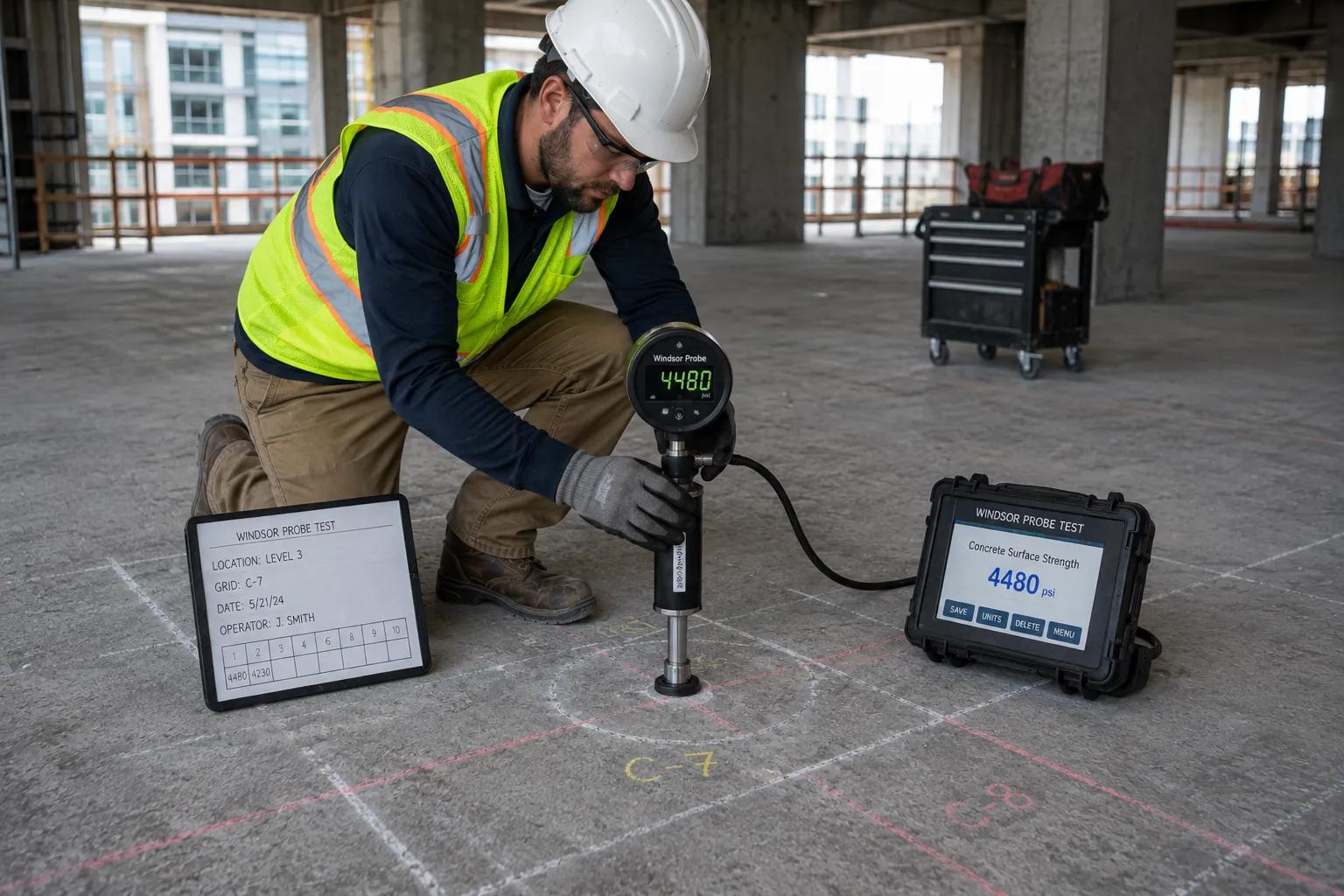
Windsor probe test measuring concrete surface strength
A coring crew shows up on schedule, drills into what looks like clear concrete, and hits a conduit that wasn't marked anywhere. Now the electrical trade is delayed, the schedule shifts, and the coordinator is fielding calls about why. GPR for concrete scanning exists to stop that chain reaction before it starts. According to the American Concrete Institute (2023), close to 30% of concrete drilling incidents trace back to unmarked utilities or reinforcement damage. On commercial projects with several trades stacked in sequence, one missed hazard can throw off every crew scheduled after it. This guide covers what GPR scanning involves, why it matters for coordinating concrete coring services, how the process runs, what it costs, and where the follow-up testing — anchor bolt pull tests and Windsor probe testing — fits in.
What Is GPR for Concrete Scanning?
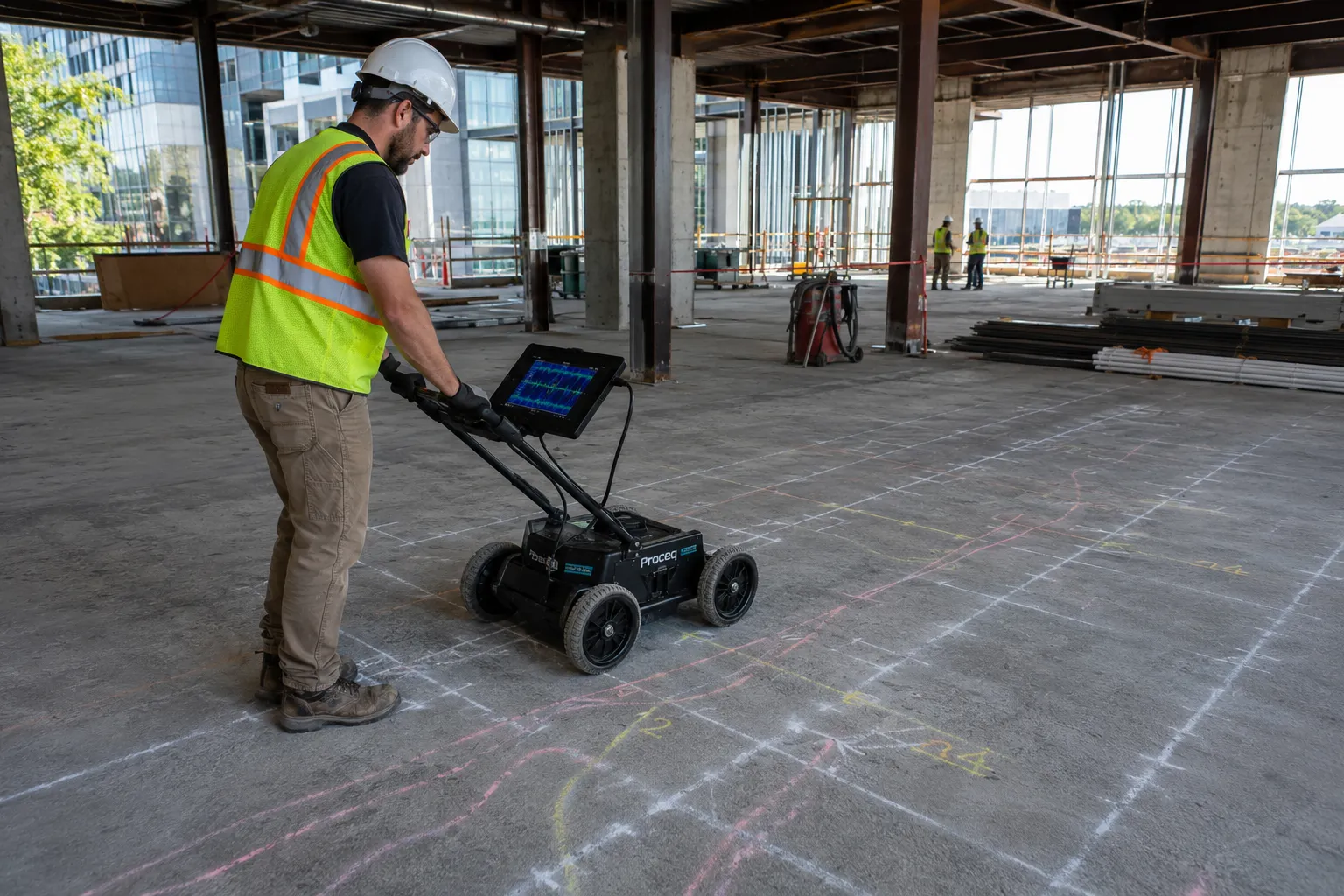
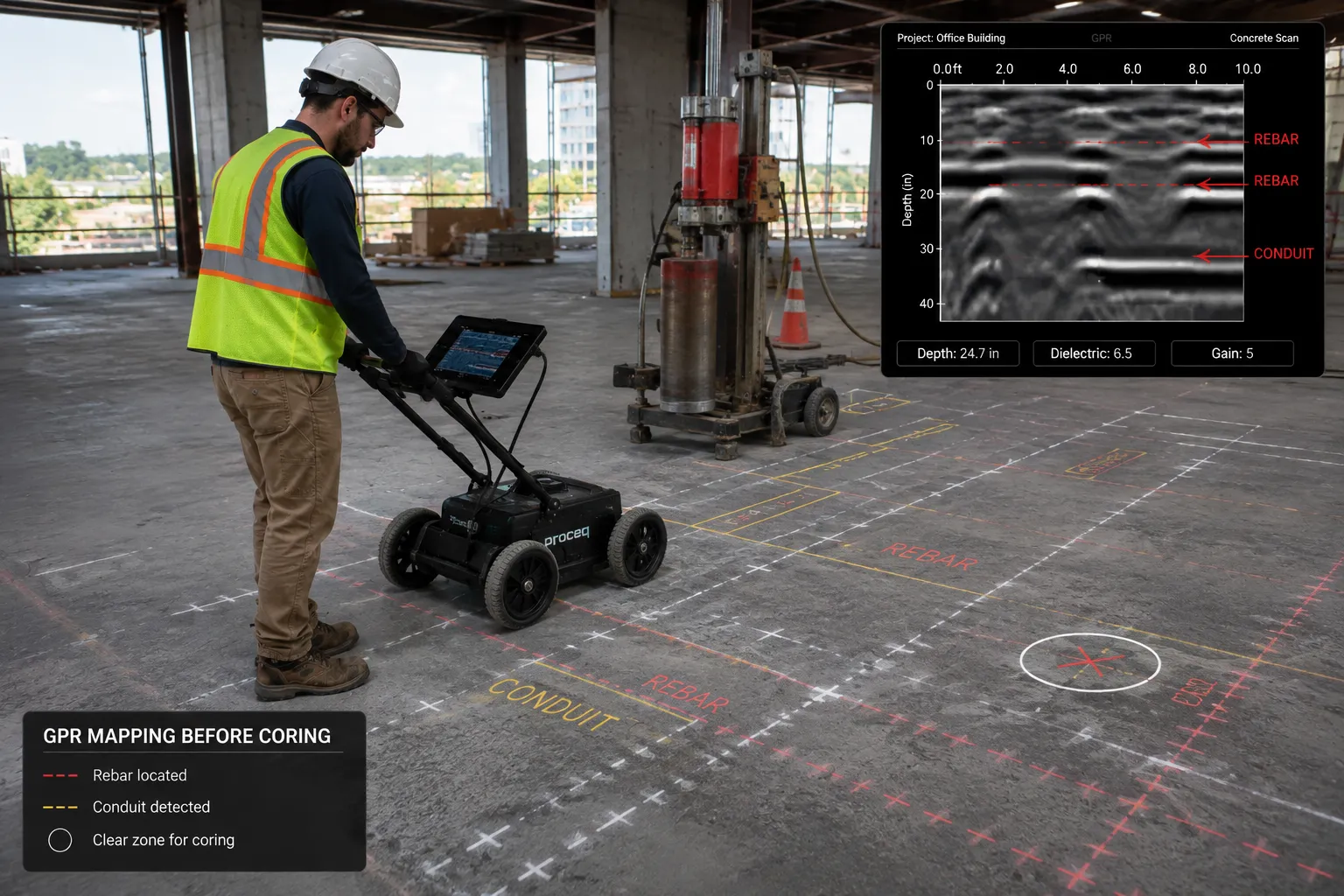
GPR for concrete scanning uses ground-penetrating radar (GPR), equipment that sends electromagnetic pulses into concrete and reads the signal that bounces back. Rebar, post-tension cables, conduits, and voids each reflect radar differently than solid concrete, which lets a trained technician map what's hidden below the surface before anyone drills into it.
A technician moves the GPR unit across the slab in a systematic grid pattern. When the unit passes over a hazard, the display shows a distinct signal pattern, and the technician marks that location directly on the concrete with paint or chalk. For a coordinator managing multiple trades on one floor, this creates a single, physical reference point every crew can work from without confusion.
GPR emits no radiation and requires no evacuation zone, unlike X-ray-based detection methods, so it can run on an active site without pulling other trades off the floor. Most standard slab sections scan in under an hour, with results ready the same day.
What a GPR scan typically identifies:
Rebar — steel reinforcement bars embedded for structural strength
Post-tension cables — high-tension cables carrying major structural load
Conduits and electrical lines — power and data cabling inside the slab
Plumbing lines — water and drainage pipes cast into concrete
Voids — hollow or weak sections that could affect structural integrity
Why Does GPR Scanning Matter for Coordinating Concrete Coring Services?
Concrete coring services build GPR scanning into their process because coring blind is a costly gamble. A severed post-tension cable can run tens of thousands of dollars to repair and can stall an entire floor's schedule for days while engineers assess the damage. On commercial projects, where trades are often sequenced tightly, a single delay ripples through every crew scheduled afterward.
There's a documentation benefit too. A GPR scan report becomes part of the project's compliance record, which matters if a dispute over damage or delay ever needs resolving between the coordinator, subcontractor, or owner. On one commercial retrofit, a scan caught a conduit running directly through a planned core line that wasn't shown on the as-built drawings — moving the core point by a few inches kept the electrical trade's schedule intact and avoided a costly rework order.
Why coordinators prioritize GPR scanning before coring:
Protects the schedule — avoids multi-day delays from hidden hazards
Reduces disputes — documented reports clarify responsibility if damage occurs
Supports trade sequencing — clear markings reduce conflicts between crews
Meets owner and spec requirements — many contracts require scan reports before permitting coring
How Does the Scanning, Coring, and Testing Process Work?
The process typically opens with a site walk, where the technician reviews planned coring zones with the site lead and flags known risks like electrical rooms or existing anchors. From there, the GPR unit passes over the marked area in overlapping rows to build a full picture of what's below the surface.
A typical sequence on a commercial job looks like this:
Site walk — confirm coring zones and flag known hazards
Grid scanning — GPR unit passes over the slab in overlapping rows
Live signal reading — technician interprets rebar, cable, and void patterns
On-site marking — safe-to-core zones are chalked directly on the concrete
Crew sign-off — the coring team reviews markings before work begins
Post-drill verification — an anchor bolt pull test or Windsor probe test confirms results
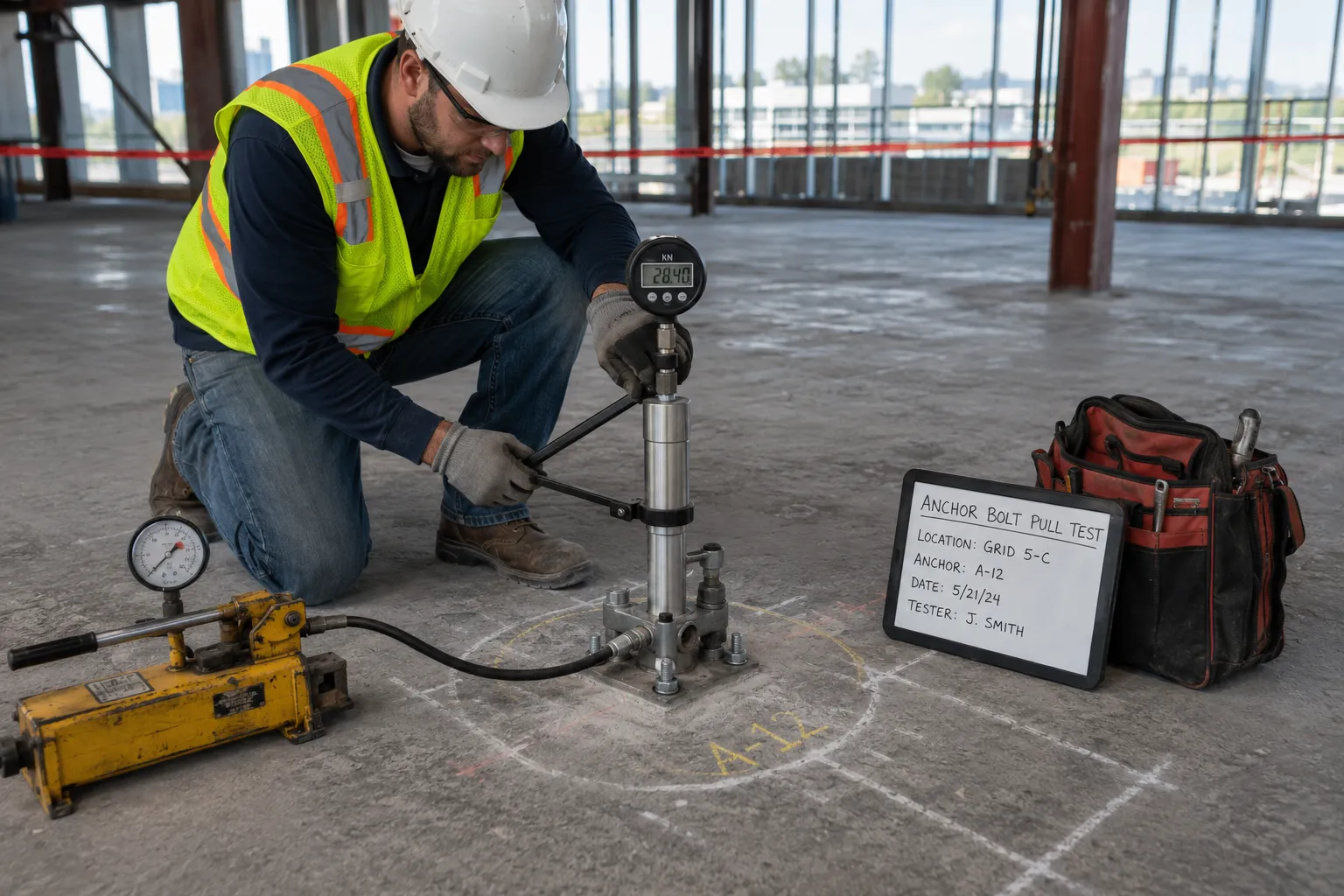
Once coring and anchor installation are complete, many commercial projects require follow-up testing. An anchor bolt pull test applies controlled tension to a drilled anchor to confirm it holds its rated load without pulling loose. Windsor probe testing, by contrast, measures the compressive strength of the surrounding concrete itself by firing a probe into the surface and reading penetration depth — useful when concrete quality, not just anchor strength, is in question.
What Does GPR Concrete Scanning Cost?
GPR concrete scanning cost depends on slab size, site access, and how many zones need scanning. Smaller jobs with a single coring location often run a flat inspection fee, while larger commercial floors are typically priced per square foot, with the rate dropping as scanned area increases. A cluttered site with obstructions takes longer to scan than an open, unobstructed slab, which can affect the quote.
For coordinators building a budget, it's worth requesting GPR concrete scanning cost estimates early, alongside quotes for any required anchor bolt pull test or Windsor probe testing, so every line item is accounted for before subcontractor bids are finalized. Compared to the cost of one damaged cable or a stalled trade sequence, the scanning cost is almost always the smaller number.
What Mistakes Do Coordinators See Most Often?
The most common mistake is treating the scan as a formality instead of reviewing marked results with the coring crew before work starts. A scan only helps if the markings are actually followed and checked by a second person before drilling begins.
Other frequent issues include scanning too narrow an area around the planned core zone, skipping the scan on sections that look simple, and failing to re-scan after a coring plan changes mid-project. On multi-trade commercial sites, coordinators sometimes assume a scan from an earlier phase still applies after design changes — it doesn't, since new anchor points need their own pass. In practice, delays from cable strikes or rebar damage almost always trace back to a scan that was rushed, skipped, or not revisited.
Tips for Coordinating GPR Scanning on Commercial Projects
Work with a provider using technicians trained specifically in GPR interpretation, not general labor handed the equipment for the day. Build scanning into the schedule early, ideally before subcontractor bids lock in, so cost estimates and timing stay accurate. Keep marking colors and documentation standards consistent across every phase of the project.
After coring, don't skip an anchor bolt pull test or Windsor probe test just because the scan came back clean — they verify different things entirely. Keep every scan report and test result filed centrally, since they're useful for compliance, insurance, and any future renovation work on the same building.
Concrete Scanning and Testing Options Compared
Method | What It Checks | Typical Cost Basis | Best Used For |
|---|---|---|---|
GPR Scanning | Rebar, cables, voids | Flat fee or per sq ft | Locating hazards pre-core |
Anchor Bolt Pull Test | Anchor holding strength | Per anchor tested | Verifying anchor performance |
Windsor Probe Test | Concrete surface strength | Per test location | Checking concrete quality |
No Scan | Nothing | No upfront cost | Not recommended for any job |
FAQ
Q1: What is GPR for concrete scanning? GPR for concrete scanning uses ground-penetrating radar to detect rebar, cables, conduits, and voids inside a slab before coring or drilling.
Q2: How much does GPR concrete scanning cost? Cost depends on slab size, site access, and scanned area, with smaller jobs priced as a flat fee and larger jobs often priced per square foot.
Q3: Is GPR scanning safe on an active commercial job site? Yes. It uses low-power radar with no radiation, so no evacuation zone is needed and other trades can keep working nearby.
Q4: What is an anchor bolt pull test? It applies controlled tension to a drilled anchor to confirm it holds its rated load without pulling loose from the concrete.
Q5: What does Windsor probe testing measure? Windsor probe testing measures the compressive strength of hardened concrete by firing a probe into the surface and reading the penetration depth.
Q6: Do concrete coring services always scan before drilling on commercial jobs? Most do, since commercial slabs often carry dense wiring and reinforcement that raise the risk of costly damage without scanning first.
Conclusion
For a coordinator, a stalled trade or a damaged cable costs more than money — it costs schedule, and schedule is often harder to recover than a repair bill. GPR for concrete scanning gives teams a documented view of what's hidden inside a slab before coring begins, while an anchor bolt pull test or Windsor probe test confirms the work holds up after. Factoring GPR concrete scanning cost into the budget early, alongside follow-up testing, keeps both money and timeline predictable. If your next commercial project involves coring, it's worth building all three steps into the plan from day one.